
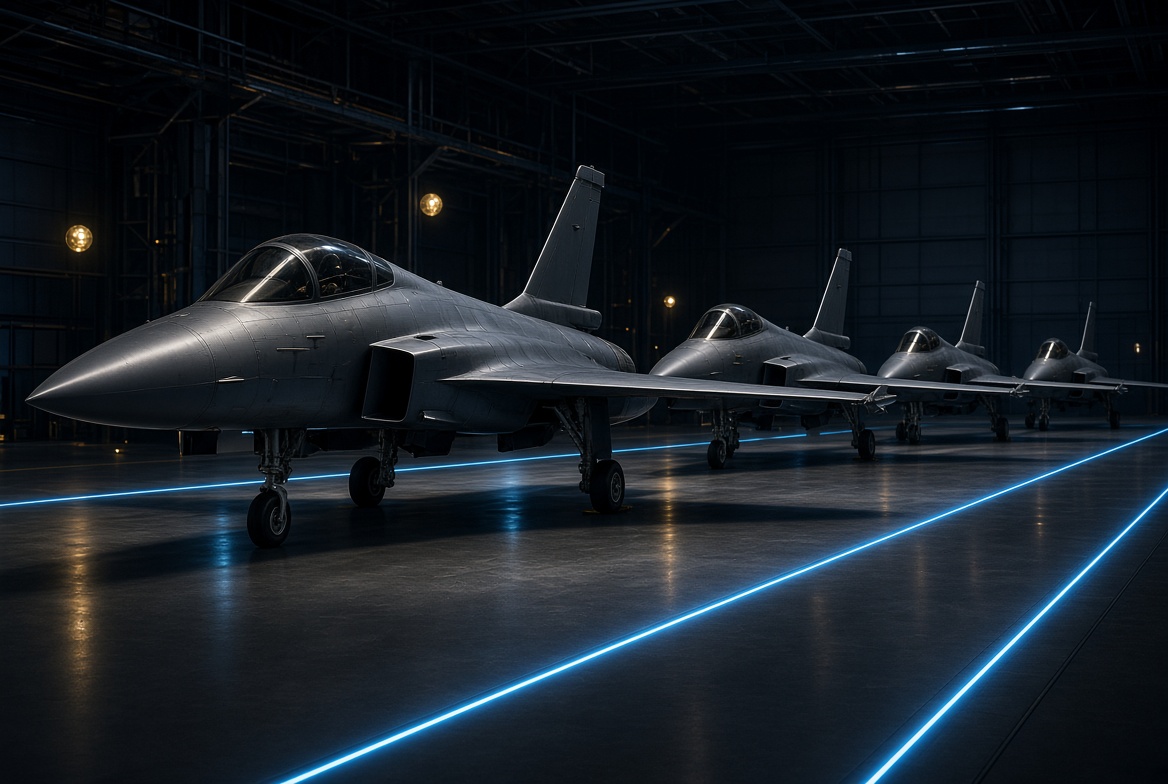
Planes
Neutral data from the official wiki. Hangar level is unlock order, not power. Always verify live numbers in-game. Each card includes role, base stats, strengths, and short real-world history.
F-5 Tiger
Starting jet. High turn rate, solid for learning gunfighting and basic dogfights. Cheap to upgrade early.
Low health and limited payload. Outclassed later by specialized jets if not upgraded carefully.
History: Northrop lightweight supersonic fighter from the 1950s–60s. Widely exported as a simple, affordable fighter. Famous as the fictional MiG-28 in the original Top Gun film.
Mirage III
Delta-wing agility. Good early turn performance once you learn energy management.
Limited radar and payload compared to later jets. Fragile in prolonged fights.
History: Dassault delta-wing fighter that first flew in 1956. One of the most successful export fighters of its era, used by many air forces worldwide.
MiG-21 Fishbed
Strong acceleration for an early jet. High turn rate makes it dangerous in merges.
Very short afterburner fuel. Low health. Easy to overextend.
History: Soviet lightweight fighter that first flew in 1955. One of the most produced combat aircraft in history, with over 11,000 built. Served in dozens of air forces.
MiG-19 Farmer
Excellent acceleration and turn rate. Strong early gunfighter.
Short fuel and low health. Limited missile capability.
History: Soviet first-generation supersonic fighter that first flew in 1953. One of the earliest operational Mach 1+ fighters. Exported widely.
MiG-23 Flogger
Variable-sweep design gives good speed and acceleration. Solid mid-tier light fighter.
Turn performance drops if you mismanage wings or energy.
History: Soviet variable-geometry fighter that first flew in 1967. Designed as a more capable successor to the MiG-21 with better radar and speed.
Mirage F1
Strong turn rate and good acceleration. Reliable light fighter once upgraded.
Still fragile. Needs careful positioning against heavier threats.
History: French Dassault fighter that first flew in 1966. Developed as a more conventional-wing successor to the Mirage III. Widely exported.
F-20 Tigershark
Exceptional acceleration and agility. Full Authority + Expert Cannons. Strong guns and reliable missiles once on the target. Hard to escape in a pursuit.
Low health. Dies quickly in sustained missile trades or against heavy firepower. Best used for quick merges and gun runs, not long-range chicken.
History: Northrop prototype light fighter evolved from the F-5E Tiger II. First flight 30 August 1982. Designed as a low-cost, low-maintenance export fighter with modern radar. Three prototypes built; program cancelled 1986 with no production orders. One surviving airframe is at the California Science Center.
F-16 Fighting Falcon
High agility and strong acceleration. Versatile once upgraded. Good all-round light fighter.
Still relatively fragile. Needs careful energy management against heavier or longer-range threats.
History: Single-engine multirole fighter that first flew in 1974. One of the most produced and exported modern fighters. Known for its high thrust-to-weight and excellent dogfight performance.
JF-17 Thunder
Balanced light fighter with good turn rate and decent missiles.
Not the fastest or toughest. Relies on pilot skill and positioning.
History: Sino-Pakistani light fighter developed jointly by China and Pakistan. First flight in 2003. Designed as an affordable modern fighter for developing air forces.
JAS 39 Gripen
Highest turn rate among lights. Delta wing trait. Excellent dogfighter once upgraded.
Low health. Easy to kill if you get caught out of position.
History: Swedish Saab multirole fighter that first flew in 1988. Known for low operating costs, short takeoff, and advanced data-linking. Still in active service and export.
F-100 Super Sabre
Early medium with decent health and payload. Good stepping stone from the F-5.
Average agility. Can be outturned by pure lights.
History: North American F-100 was the first operational supersonic fighter in the US Air Force. First flight 1953. Served in Vietnam and was widely exported.
J35 Draken
Double-delta design gives strong turn performance. Solid mid-tier medium.
Limited modern missile options compared to later jets.
History: Swedish Saab double-delta fighter that first flew in 1955. Known for its unique shape and high-altitude interception role. Served into the 1990s.
F-106 Delta Dart
Excellent climb and radar. Strong interceptor-like medium.
Slower acceleration. Needs altitude to shine.
History: Convair delta-wing interceptor that first flew in 1956. Designed as a pure air-defense fighter with the SAGE system. Served until the 1980s.
JA 37 Viggen
Strong climb and canard-delta design. Good speed and radar for its tier.
Turn rate is average. Benefits from energy advantage.
History: Swedish Saab fighter that first flew in 1967. First production canard-equipped fighter. Known for short-field performance and advanced avionics for its time.
MiG-29 Fulcrum
High acceleration and strong turn. Classic dogfighter.
Shorter fuel. Can be outranged by pure interceptors.
History: Soviet twin-engine fighter that first flew in 1977. Designed as a counterpart to the F-16/F-15. Known for high agility and helmet-mounted sight in later variants.
J-10 Firebird
Balanced performance with good missiles. Strong once upgraded. Flexible role.
Not the fastest or the most agile. Needs good positioning to shine.
History: Chengdu J-10 is a Chinese multirole fighter that first flew in 1998. Designed as a modern light/medium fighter with fly-by-wire controls and canard-delta configuration.
F/A-18 Hornet
Balanced carrier fighter. Good durability and payload for a medium.
Average speed and turn. Relies on teamwork and positioning.
History: McDonnell Douglas carrier-capable multirole fighter that first flew in 1978. Widely used by the US Navy/Marine Corps and exported. Known for reliability and versatility.
Mirage 2000
Excellent climb and turn. Strong delta-wing performance.
Lower health. Can be fragile if caught low and slow.
History: French Dassault delta-wing fighter that first flew in 1978. Multirole successor to the Mirage III. Still in service with several air forces.
Rafale F3-R
High agility and modern systems. Excellent all-rounder once fully upgraded.
Not the fastest interceptor. Best used with energy advantage.
History: French Dassault omnirole fighter that first flew in 1986. Known for advanced avionics, sensor fusion, and versatility. Operated by the French Navy and Air Force.
Typhoon FGR4
Strong climb, turn, and radar. High-performance European medium.
Requires good energy management to maximize its potential.
History: Eurofighter Typhoon is a twin-engine canard-delta multirole fighter developed by a European consortium. First flight 1994. Highly agile and in service with several NATO air forces.
KF-21 Boramae
Modern radar and balanced performance. Strong once upgraded.
Not the most agile pure dogfighter. Benefits from team support.
History: South Korean next-generation fighter developed by KAI. First flight 2022. Designed as a modern multirole platform with advanced sensors.
F-35 Lightning
Stealth-oriented design. Good sensors and balanced performance.
Lower health. Relies more on positioning and awareness than pure turn fighting.
History: Lockheed Martin fifth-generation multirole fighter that first flew in 2006. Designed with stealth, sensor fusion, and multirole capability. Widely adopted by US and allied air forces.
F-4 Phantom
High health and strong payload. Good early heavy missile platform.
Lower turn rate. Can be outmaneuvered by lights if energy is lost.
History: McDonnell Douglas twin-engine fighter that first flew in 1958. One of the most produced Western fighters of the Cold War. Served in multiple roles and air forces.
Tornado ADV
Swing-wing design and strong missiles. Good at altitude.
Not a pure dogfighter. Loses advantage if forced low and slow.
History: Panavia Tornado Air Defence Variant. Variable-sweep wing interceptor developed for the RAF. First flight 1979. Focused on long-range interception.
Su-27 Flanker
High health, strong missiles, and good speed. Excellent energy fighter.
Larger target. Can be outturned by lighter jets if energy is mismanaged.
History: Soviet twin-engine air superiority fighter that first flew in 1977. Designed as a counterpart to the F-15. Known for high maneuverability and long range.
F-15 Eagle
High health, strong missiles, solid speed. Excellent energy fighter and missile platform.
Larger target. Can be outturned by lighter jets if you lose energy.
History: McDonnell Douglas air superiority fighter that first flew in 1972. One of the most successful modern fighters with an unmatched air-to-air combat record in real service.
Su-30 Strike Flanker
Strong payload and durability. Good multirole heavy.
Slightly slower acceleration than pure Flankers. Benefits from team play.
History: Russian twin-seat multirole derivative of the Su-27. First flight 1989. Designed for long-range strike and air superiority. Widely exported.
Su-33 Sea Flanker
Carrier-capable Flanker with solid performance. Good missiles and durability.
Not the most agile pure dogfighter. Needs energy advantage.
History: Russian navalized version of the Su-27. First flight 1987. Designed for carrier operations with folding wings and strengthened gear.
F/A-18F Super Hornet
Balanced heavy with good payload and durability. Reliable platform.
Average acceleration. Best used with support or energy advantage.
History: Boeing evolution of the Hornet. First flight 1995. Larger, more capable carrier fighter with advanced avionics. Primary US Navy fighter.
Su-35 Super Flanker
High turn rate for a heavy. Strong missiles and durability. Excellent once upgraded.
Still a large target. Requires good energy management.
History: Russian advanced Flanker derivative with thrust-vectoring engines. First flight 2008. Highly maneuverable air superiority fighter.
Su-47 Berkut
Forward-swept wing design gives unique agility. Strong performance.
Not the most durable pure interceptor. Benefits from careful play.
History: Experimental Russian forward-swept wing technology demonstrator. First flight 1997. Never entered production but influenced later designs.
F-22 Raptor
Stealth and high agility. Strong all-round performance at top tier.
Lower health than some heavies. Relies on positioning and awareness.
History: Lockheed Martin fifth-generation air superiority fighter. First flight 1997. Features stealth, supercruise, and advanced sensors. Operated exclusively by the US Air Force.
Su-57 Felon
Modern stealth-oriented heavy with high agility and strong missiles.
Lower health. Needs careful energy and positioning play.
History: Russian fifth-generation fighter. First flight 2010. Designed with stealth features and advanced avionics. Entered limited service in the 2020s.
F-111 Aardvark
High health and long-range radar missiles. Strong boom-and-zoom platform.
Slow climb and turn. Do not pure dogfight. Stay high and fast.
History: General Dynamics variable-sweep wing aircraft that first flew in 1964. Originally a multi-role fighter, later focused on strike. Known for long range and terrain-following radar.
F-14 Tomcat
Long-range radar missiles, good speed and climb. Swing-wing + cruising altitude traits. Classic boom-and-zoom interceptor.
Not a pure dogfighter. Loses advantage if forced low and slow. High skill ceiling on missile timing.
History: Grumman variable-sweep wing fighter that entered service in 1974. Famous for its long-range AIM-54 Phoenix missiles and carrier operations. Retired from US Navy service in 2006.
MiG-31 Foxhound
Extremely high climb speed and long-range radar. Pure interceptor.
Very low turn rate. Do not dogfight. Stay high and use range.
History: Soviet high-speed interceptor that first flew in 1975. Designed to intercept high-altitude bombers and cruise missiles. One of the fastest operational combat aircraft.
J-20 Mighty Dragon
High speed and long-range capability. Modern stealth-oriented interceptor.
Low turn rate. Not a dogfighter. Stay high and use missiles.
History: Chinese fifth-generation stealth fighter. First flight 2011. Designed for air superiority and long-range interception with advanced sensors and stealth features.
A-6 Intruder
High armor and useful jamming ability. Strong close-range presence once you learn to use the jam.
Slow. Vulnerable in open air. Best near terrain or with teammates.
History: Grumman carrier-based all-weather attack aircraft that entered service in 1963. Known for its long range and ability to operate in poor weather. Retired in 1997.
A-4 Skyhawk
Surprisingly agile for an attack jet. Good guns and durability for early game.
Still slow compared to fighters. Best used with support or in terrain.
History: Douglas light attack aircraft that first flew in 1954. Compact, simple, and widely exported. Served in many conflicts including Vietnam.
Su-22 Fitter
High armor and strong close-range weapons. Durable once upgraded.
Slow. Easy to missile if caught in open sky.
History: Soviet variable-sweep attack aircraft derived from the Su-17. First flight 1966. Widely exported and used in many regional conflicts.
Jaguar GR3
Decent agility for an attack jet. Good guns and payload.
Lower health than pure tanks. Needs careful positioning.
History: Anglo-French SEPECAT light attack aircraft that first flew in 1968. Designed for low-level strike. Served with the RAF and French Air Force.
Su-25 Frogfoot
Extremely durable with strong guns and armor. Excellent for holding points or short-range fights.
Very slow. Easy to missile in open sky. Best near terrain with support.
History: Soviet close air support aircraft that first flew in 1975. Designed for battlefield survivability with heavy armor and redundant systems. Still in service.
A-10 Thunderbolt
Extremely durable with strong guns and armor. Excellent for holding control points or short-range fights in terrain.
Very slow. Easy to missile if caught in open sky. Best used with team support or near terrain.
History: Fairchild Republic close air support aircraft designed around the GAU-8 Avenger cannon. Entered service in 1977. Known for its survivability and ability to operate from rough fields.
Su-34 Fullback
High speed for an attack jet. Strong payload and durability. Good hybrid role.
Still not a pure dogfighter. Benefits from energy and positioning.
History: Russian twin-seat strike aircraft derived from the Su-27. First flight 1990. Designed for long-range precision strike with side-by-side cockpit.
Notes
Base stats are approximate from the official wiki and change with patches and upgrades. Hold planes near level 3 / 8 / 11 / 20 for better matchmaking. Traits (Full Authority, Delta Wing, Cruising Altitude, Stealth, Armor Plating, etc.) significantly affect how each jet plays. Always check the in-game screen and the official wiki for current loadouts, special abilities, and exact numbers.